
The Fourth Magus: The Forgotten One
In the shadowed corners of history lingers a fragmentary tale of a
fourth Magus—a figure whose name and face have been erased by
time. He came, it is said, from the ancient lands of Egypt, a seeker
called not by kings but by the unseen. His journey is not etched in
gilded icons or immortalized in carols, but in whispers, riddles, and
the cryptic scribblings of forgotten scrolls.
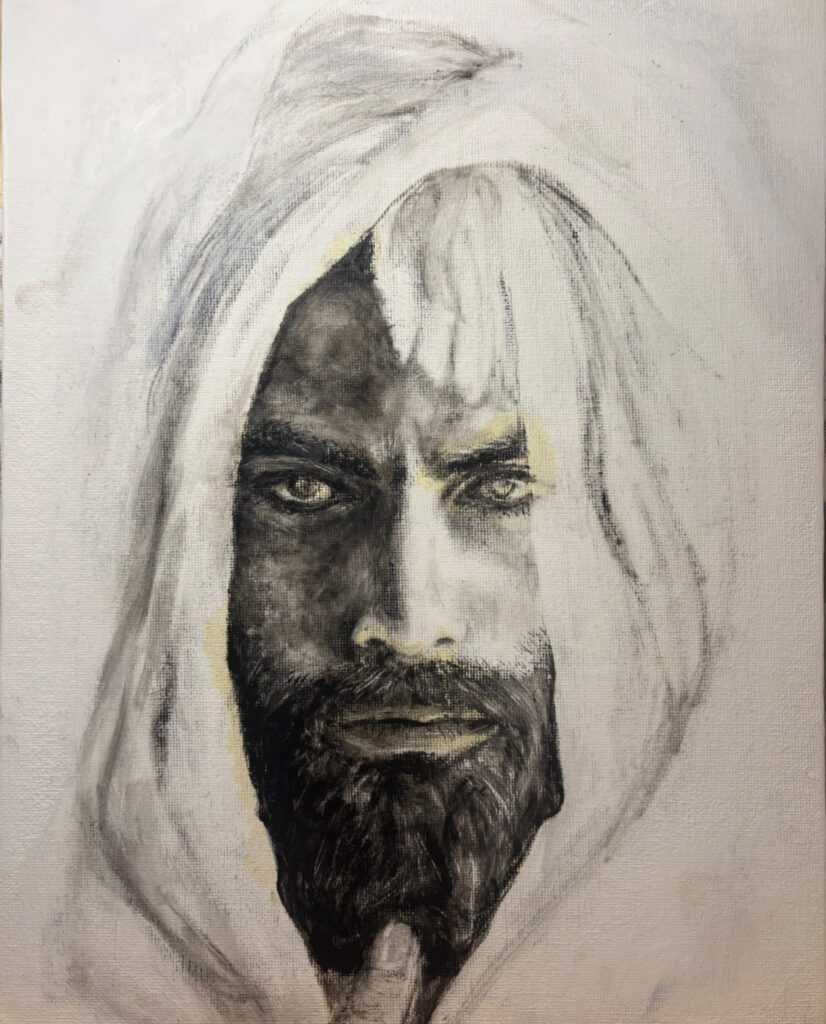
He began his journey clean-shaven, a youthful face framed by the
innocence of untried conviction. His eyes, like embers, burned with
the intensity of one who sees not only the world but through it, into
the spaces between. By the time he reached his destination, a thick
black beard marked the trials he had endured and the transformation
of his soul.
Chapter One: The Star and the Hidden Path
In the city of Memphis, the Magus lived as a seeker, surrounded by
temple walls inscribed with the wisdom of the ancients. Night after
night, he gazed at the stars, not with wonder but with the precision of
one trying to decode their secret language.
One fateful night, a star brighter than any other split the heavens. It
was unlike anything he had ever charted—a beacon that burned with
purpose. The temple priests marveled at the celestial anomaly, but
the Magus knew it was a summons. It was not merely a light; it was a
doorway, a crack in the fabric of time.
Gathering his belongings, he took three items he felt compelled to
carry:
- The Ankh, the ancient symbol of
life and
eternity, a
reminder of
the unity of
opposites. - A
Ciphered
Scroll,
inscribed
with cryptic
symbols, a
riddle
meant to
unveil
divine
mysteries. - Salt
of Natron,
humble yet
sacred,
representin
g
purification
and
transformat
ion.
Without a
word, he
departed
from the
temple. His
clean-
shaven
face was
the last
remnant of
the life he
left behind,
soon to be
reshaped
by the trials
to come.
Chapter Two: The Lands of the Parthians
The Magus’s journey led him across the arid expanses of Parthian
lands. The sun scorched his back, and the winds carried whispers he
could not yet understand. Hunger gnawed at him, and the sandstorms
obscured his path, but he pressed onward, guided by the star.
In a small village, he met a nomadic astronomer. Her sharp eyes and
weathered face spoke of her own trials. As she tended a fire, she
spoke without looking up.
“You follow a light that few can see.”
Startled, the Magus asked, “How do you know of it?”
She smiled faintly. “It burned brighter than the sun, then faded,
leaving its mark. You are not the first to follow such a sign.”
Through the night, she shared her vision of a distant kingdom and the
promise of wisdom that awaited those who reached it. Before they
parted, she gave him a vial of oil.
“For when the light within you grows faint,” she said, “let this remind
you to endure.”
Chapter Three: The Mountains and the Mockers
Beyond the plains lay a treacherous mountain range. Snow blanketed
the ground, and the air grew thin, cutting at his lungs with every
breath.
One evening, a caravan of merchants passed him, their laughter
echoing through the peaks.
“You chase a phantom,” one said. “A star that no longer shines. Go
back before the cold claims you.”
Their mocking words lingered as the Magus sheltered in a shallow
cave that night. Doubt crept in like the icy wind, but as he looked out
into the distance, a faint glimmer of the star broke through the
clouds. He clutched the oil, its scent grounding him in purpose, and
pressed on.
Chapter Four: The Distant Villages
Descending the mountains, the Magus reached distant villages where
life clung tenuously to the barren land. In one, he met a potter who
shared a simple meal with him. As they sat by the fire, the potter
spoke of a recurring dream.
“There is a man in white,” he said, “with eyes like fire. He stands at a
crossroads, pointing the way, though he says nothing.”
The Magus leaned forward, his pulse quickening. “And what does he
reveal?”
The potter shrugged. “Only that there is something beyond this
world, waiting to be found.”
In gratitude for his hospitality, the Magus repaired the potter’s kiln.
Before he departed, the potter handed him a small clay charm,
inscribed with the symbol of an eye.
“For your journey,” the potter said simply.
Chapter Five: Bethlehem and the Revelation
At last, the Magus reached Bethlehem. The star had faded, but its
resonance lingered in the air. Guided by whispers, he found the
stable.
Inside, the air was warm, filled with the scent of hay and the soft coos
of animals. The child lay swaddled, his presence radiating a quiet
power. The Magus knelt with the others, placing his gifts before the
infant. The Ankh, the Scroll, and the Salt of Natron—symbols of
eternity, mystery, and transformation.
As he rose, he pointed a single finger at himself. His voice, steady and
filled with awe, carried a simple truth:
“AS WITHIN, SO WITHOUT.”
The child’s gaze met his, and in that moment, the Magus understood.
The divine he sought was not distant, but something mirrored within
his own soul.
Chapter Six: The Journey of the Seeker
Unlike the other Magi, the fourth did not return home. Instead, he
turned eastward, seeking the truth awakened within him.
The oil and the clay charm became his talismans. In a dense forest,
when doubt clouded his mind, he anointed his hands with the oil. Its
scent stirred the astronomer’s words: “Endure.” It reminded him of
the divine spark within, urging him to press on.
The clay charm, warmed by his touch, guided him like a compass. In
the silence of the mountains, it seemed to pulse with life, ‘Journey
on!’ It whispered, anchoring him in moments of meditation beneath
the stars.
Yet even as he wandered, he felt the weight of an unanswered
question: was enlightenment something to be found, or had it always
been within him?
Chapter Seven: The Revelation Within
One evening, he sat by a still lake, his face reflected in the water’s
surface. His beard, thick and weathered, framed a face transformed
by time and trials. He clutched the clay charm, its surface worn
smooth, and anointed himself with the final drops of oil.
Closing his eyes, he saw the child in Bethlehem, the star, the
astronomer, the potter—all moments on a path that now revealed
itself.
The answer struck like lightning: the light he sought had always
been within.
He smiled, a tear tracing the line of his beard. Rising, he whispered to
the wind:
“The journey was the answer.”
Epilogue: The Disappearance and Legacy
The Magus vanished, his fate unknown. Some say he ascended into
the mountains; others believe he found a hidden empire in the far
east.
But his story endures—in fragments of scrolls, dreams shared by
mystics, and whispers of a man in white robes who points not to the
heavens, but inward.
–
: : –
His tale reminds us that the light we seek is not a distant star but the
flame that burns within our own souls.
His journey was one of growth, endurance, and shared purpose—
a testament to the divine that dwells in all who dare to seek it.
第四位贤⼠:被遗忘者
在历史的阴影中,流传着⼀个⼏乎被遗忘的故事。它讲述了第四位贤⼠的
传奇⸺⼀个名字和⾯容都被时间抹去的⼈。据说,他来⾃古⽼的埃及,
并⾮被国王召唤,⽽是被⼀种⽆形的⼒量唤醒。他的旅程没有被铭刻在⾦
光闪闪的圣像上,也没有被载⼊颂歌,⽽是隐匿在⽿语、谜语以及尘封卷
轴的残⽚中。
贤⼠年轻时⾯容光洁,脸上带着未曾经历考验的纯真。他的眼神如同燃烧
的余烬,透过世界表象直视其中的真相。漫⻓的旅途让他发⽣了巨⼤的变
化,当他终于抵达⽬的地时,浓密的⿊胡⼦记录了他所经历的磨难,也⻅
证了他的灵魂蜕变。
在埃及的孟菲斯城,这位贤⼠居住在寺庙中,⽇夜沉浸在古⽼的智慧中。
他常常仰望星空,但他的⽬光中没有敬畏,⽽是带着解读其中隐秘规律的
专注。某个夜晚,⼀颗⽐任何星星都明亮的星⾠划破了夜空。这颗星与他
以往记录的任何星象都截然不同,它不仅仅是光,⽽是⼀扇通往未知的⻔
户。寺庙中的祭司们为这异象感到惊奇,但贤⼠明⽩,这是⼀种召唤。
他收拾⾏装,带上三样物品:象征⽣命与永恒的⽣命之符;刻满神秘符号
的密码卷轴;以及象征净化与转化的⽊乃伊盐。这些东⻄是他直觉中必不
可少的旅途伴侣。他没有多说⼀句话,离开了寺庙。他那年轻光洁的脸
庞,成为他告别旧⽣活的最后印记。
穿越帕提亚的荒原,烈⽇灼烧着他的⽪肤,⻛中夹杂着低语。他在沙尘暴
中艰难前⾏,忍受饥饿的折磨,始终追随着那颗引领他的星⾠。在⼀个偏
僻的⼩村庄,他遇到了⼀位游牧的天⽂学家。她的双眼锐利,满脸⻛霜写
满了岁⽉的沧桑。⽕光摇曳中,她对他说:“你追随的是⼀束只有少数⼈能
看到的光。”贤⼠吃惊地问她怎么知道,她只是淡然⼀笑,说:“它曾⽐太
阳还亮,然后渐渐消失,但留下了印记。你并⾮第⼀个追随这道光的⼈。”
分别前,她给了他⼀瓶油,并叮嘱他,“当你感到内⼼光芒微弱时,⽤这油
提醒你坚持。
”
他的旅程继续,将他引向⼀⽚危险的⾼⼭。寒⻛如⼑,空⽓稀薄,每⼀步
都充满痛苦。⼀天,他遇到了⼀队商⼈。他们嘲笑他,说他追逐的是⼀颗
早已熄灭的星⾠,劝他放弃。他没有回应,但在当晚的⼭洞⾥,当寒冷与
怀疑同时袭来,他从⾐物中取出了那瓶油,油的⽓味让他重新找到坚持的
⼒量。他看向远处,⼀丝微弱的星光穿透云层,像是在对他招⼿。他不再
犹豫,继续前⾏。
翻越⾼⼭后,他来到了⼀些偏远的村庄。在⼀个村庄⾥,他遇到了⼀位陶
⼯。陶⼯邀请他共进简单的晚餐,并分享了⼀个反复出现的梦境:“梦中有
⼀位身穿⽩袍的⼈,他的眼睛像燃烧的⽕焰。他站在⼗字路⼝,指向⼀个
⽅向,但从未说话。
”贤⼠听后,⼼潮澎湃,追问那⼈的指引是否透露了什
么。陶⼯摇摇头,说:“只是暗示有某种超越我们世界的东⻄等待被发
现。
”贤⼠为陶⼯修好了破损的窑炉,临别时,陶⼯赠予他⼀个刻有眼睛符
号的⼩陶制护身符,
“希望它能为你的旅程带来指引。
”
历经千⾟万苦,他终于抵达了伯利恒。那颗星⾠虽然已经隐没,但它的余
韵仍然回荡在空⽓中。在低语的指引下,他⾛进了⼀间简陋的⻢厩。⻢厩
内,空⽓温暖,混合着⼲草的⽓息与动物的轻声嘶鸣。他看到⼀位⺟亲怀
抱着新⽣的孩⼦,孩⼦的存在散发着⽆法⽤语⾔形容的⼒量。贤⼠跪下,
将他的三件礼物奉上:⽣命之符、密码卷轴和天然盐,象征永恒、奥秘与
转化的礼物。
起身时,他单指指向⾃⼰的胸⼝,低声说道:“内在之光映照外在之光。”
婴孩的⽬光与他的相遇,在那⼀刻,他终于明⽩,⾃⼰追寻的神圣并不遥
远,⽽是始终存在于灵魂的深处。
与其他贤⼠不同,他没有返回故乡。他转向东⽅,踏上新的旅程,去探索
内⼼被唤醒的真理。在森林深处,当疑惑笼罩时,他会⽤油涂抹双⼿,油
⾹让他记起那位天⽂学家的话:“坚持下去。”陶制护身符也成为他的指
引,它仿佛有⽣命般微微发热,提醒他继续前⾏。
⼀个清冷的夜晚,他坐在湖边,看着⾃⼰的倒影。浓密的胡须记录了时光
的洗礼。他⽤最后⼀滴油涂在额头,闭上眼睛,回忆起那颗星⾠、那个孩
⼦,以及旅途中遇到的所有⼈和事。他突然明⽩了:⾃⼰追寻的答案,从
未离开过,⽽是⼀直存在于内⼼。
他微微⼀笑,⼀滴泪滑落。他站起身,对着⻛轻声说道:“旅程本身就是答
案。
”
从此,贤⼠的身影再未出现。有⼈说他登上了⾼⼭,也有⼈认为他在东⽅
找到了隐秘的帝国。然⽽,他的故事依然流传。在破损的卷轴⾥,在神秘
者的梦中,在关于⽩袍男⼦的传说中,他不是指向天际的星⾠,⽽是指向
每个⼈的内⼼深处。
这个故事告诉我们,我们追寻的光,不是遥远的星星,⽽是燃烧在⾃⼰灵
魂深处的⽕焰。第四位贤⼠的旅程,是成⻓、坚持与共同⽬标的象征,也
是对每个追寻者⼼中神圣⼒量的⻅证。
–